The Lope’s Exposé
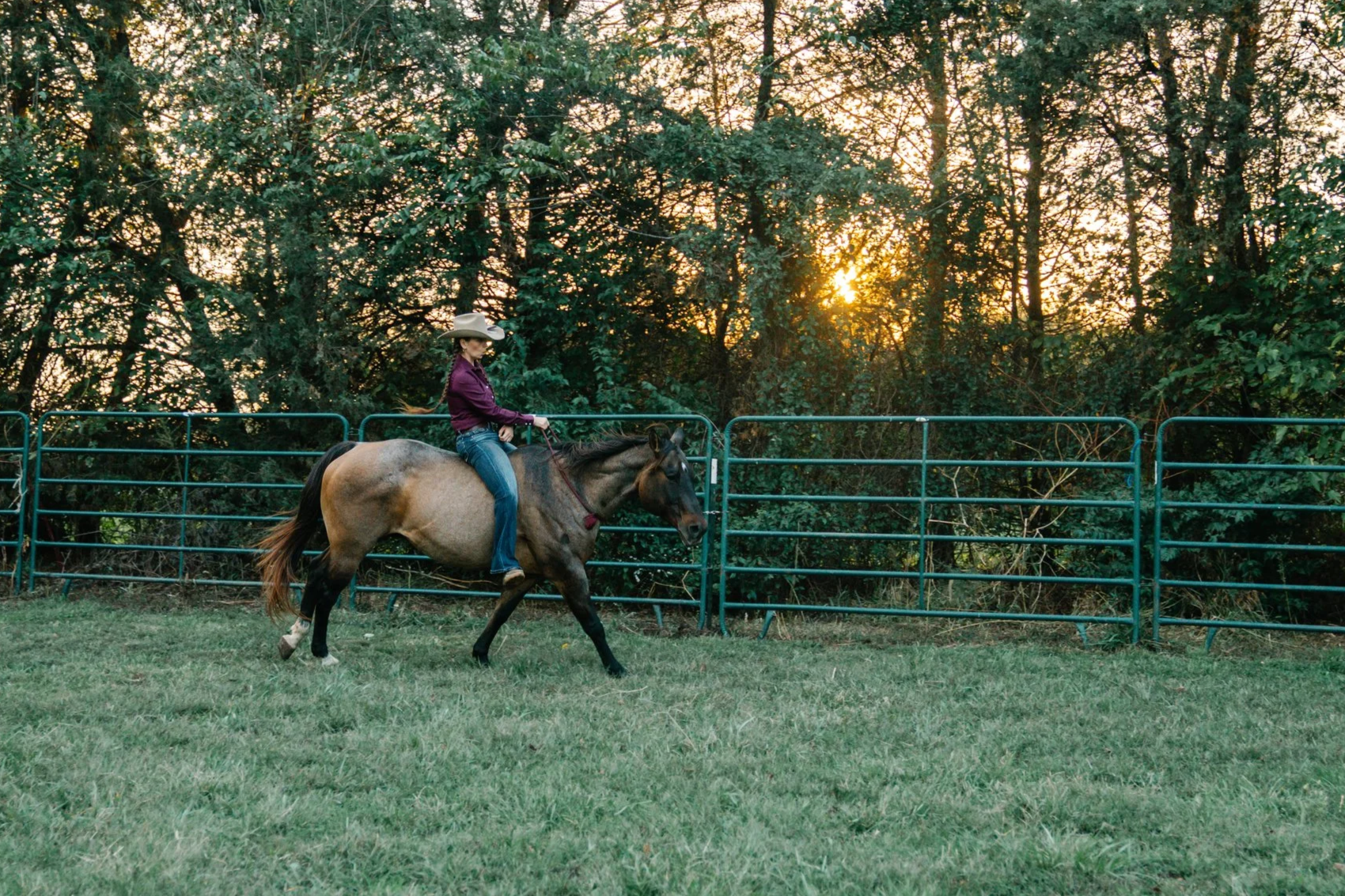
Even for trainers, not every moment is perfect.
What we do is strive for a few perfect moments during a perfectly imperfect ride, full of effortless partnership and communication.
The Question Students Ask
A worry every horsemanship student eventually faces:
“My horse and I feel totally fine at the walk and trot… but as soon as we pick up the lope, it feels like my horse is going to fall and roll over.”
This concern is extremely common. The fear of a horse going down underneath us can be crippling. Many riders avoid going faster than a trot altogether for this reason.
This misbalance creates fear and confusion—how could we feel so much more balanced at the walk and trot, yet fall apart at the canter?
We all dream of the day we can run across a field on horseback—hoofbeats pounding beneath us, the wind blowing through our hair—complete, blissful harmony.
Reality is, many never get there. Not because of inherent danger, but because of that diagnostic feeling that something isn’t right.
We often learn to ride through a horse’s misbalance, especially at faster gaits. A good trainer, however, will take this moment as an opportunity to teach—for the sake of both horse and rider.
Because the imbalance isn’t only in the lope—the lope merely exposes it.
Two Different Types of Balance Are Often Confused
We riders are typically taught that balance is all on us. We learn how to sit upright, stay centered, and move fluidly enough for the horse to perform what we ask.
This works—to a point. Straight lines and big circles often feel fine, but the lingering question remains:
“Am I doing everything right so this horse and I are truly a team?”
Finding just enough balance to get by may win a few prizes—but is that worth compromisingthe experience of true harmony?
For me, the answer is no—and my students reflect that answer every day.
When we choose to ride horses, we choose a sport with a teammate of another species—a predator working with prey. True partnership requires more than rider balance alone; it demands attention to the horse’s balance as well.
As handlers, we must understand how the horse organizes their body and how our balance can either support—or sabotage—that organization. Horsemanship decisions should aim not merely to survive movement, but to thrive within it.
Too many riders focus solely on their own balance, expecting it to magically transform into horse–human harmony. How can we learn rider-only balance and expect it to miraculously become shared balance? Expecting partnership without understanding the horse’s role removes them from the team entirely.
Every healthy relationship requires both parties to hold their own and consider the other’s perspective.
We cannot expect good balance on horseback without understanding how a horse balances—both with and without a rider.
Where Balance Should Be Learned First: Intentional Groundwork
“No one can teach feel” is a cliché—and it’s not entirely true.
Feel can absolutely be developed—with the right perspective and approach. Riding itself can be enjoyable for anyone, but success begins with seeing.
To understand equine balance, we must first observe movement:
Are they upright or leaning?
Tripping or gliding?
Slow or quick to transition?
Intentional groundwork and thoughtful positioning teach us these answers.
Most people assume groundwork is simply anything done on the ground. While technically true, the intention behind groundwork is often misunderstood. The term itself has become diluted—read the linked post for a full explanation of what groundwork truly means.
The goal of groundwork is not perpetual lunging—it is thoughtful positioning. Lunging has a place—it can assess soundness and balance. But too often it’s used to tire a horse, demand attention, or simply watch movement.
Here’s the reality: until a horse is strong enough to go in self-carriage—bending correctly, maintaining straightness, and staying upright—endless circles are more detrimental than helpful.
(Again, this will be expanded on in the next article.)
The purpose of developing feel is learning to ask for and recognize functional movement—so it can later be recreated under saddle as a team.
On the ground, we can:
See how a horse shifts weight
Notice where they brace or fall in
Observe rhythm, alignment, and effort
This visual understanding leads to clearer communication, better timing, and a confident, educated feel.
We don’t skip straight to feel—we build feel by first learning what balance looks like.
Walk & Trot: Where Rider Balance Can Hide
At the walk and trot, horses often compensate—especially beneath new or weaker riders. These two-beat gaits are inherently more stable, allowing riders to focus inward while the horse quietly carries extra responsibility.
When a rider looks inward, the horse is removed from the equation. Balance becomes rider-only—and the horse’s effort goes unnoticed.
How can we support balance we aren’t aware of?
If you’ve ever ridden or owned a seasoned lesson horse, you know they’re worth their weight in gold—absorbing imbalance silently and so seamlessly the rider never notices. This comes at a cost, creating braces and strain in the horse’s body over time.
On the flip side, a rider may feel correct, confident, and comfortable—yet still be unaware of how the horse beneath them is actually carrying themselves.
Horsemanship is often treated like a solo sport—but it isn’t. True teamwork is built outside the arena through fitness, communication, and mutual understanding. Teammates train together, learn each other’s strengths and weaknesses, and adjust accordingly so the whole team succeeds when it matters.
So, in horsemanship, partnership means committing to:
Groundwork
Fitness
Knowing one another
Stack that with species-appropriate care—freedom, forage, and friends—and we create a horse capable of emotional regulation, functional movement, and longevity.
Add in strength, timing, and responsiveness to feedback through thoughtful stewardship of our horse’s mind, body, and spirit, and we become unstoppable.
The Bicycle Analogy: Why the Lope Changes Everything
Most of us have ridden a bicycle. Early on, we focus on staying upright and steering on flat ground—much like riding at the walk and trot.
But imagine riding a bike on a balance beam, uneven terrain, or attempting tricks. Subtle weight shifts suddenly matter. Errors are no longer absorbed—they’re exposed.
The lope functions the same way.
As a three-beat gait with natural asymmetry, it demands shared balance. If balance hasn’t been addressed between horse and rider, the lope reveals it immediately. Those subtle weight shifts have actually always mattered.
Riders feel like they might fall—not because they’re incapable, but because they’re suddenly responsible for more than just themselves.
Too often, riders are pushed through this stage—kick, chase, drive, hold on—without understanding what’s actually happening. This leads to frustration, plateau, and the belief that only professionals can achieve true harmony—they’re the ones who make it look easy.
But the key isn’t talent.
It’s shared balance, built on a foundation that considers the horse just as much as the rider.
The Lope Reveals What Hasn’t Been Addressed
The lope requires engagement, bend, and proper weight transfer for upright balance.
That falling-forward feeling stems from:
Poor core and lateral engagement
Incorrect bend
Inefficient weight transfer to hindquarters
Without groundwork to build strength and understanding, the horse feels unstable, the rider feels powerless, and confidence drops.
The issue isn’t that the horse can’t lope—it’s that no one taught them how to lope with a rider.
What Partnership Looks Like in Real Riding
Every inner horse girl recognizes the scenes—bareback gallops, effortless communication, horses responding as if by thought alone. We’re often told those images are unrealistic.
But what if they aren’t fantasy—just unexplained?
There is a progression to good horsemanship that leads to effortless partnership.
Riders begin with straight lines and large shapes, developing their own balance, steering with their body, and building confidence. This stage is important for both horse and rider to get to know one another.
The next step isn’t just seat.
Its learning to observe the horse, influence weight shifts, and support straightness and strength.
This isn’t exclusive to trainers.
Anyone seeking harmony does this.
I call them Mindful Horsemen.
The keys to lift, bend, and quality transitions starts on the ground—understanding movement from nose to tail, hoof to poll.
This is where partnership begins.
Visual understanding becomes feel
Feel becomes timing
Timing becomes harmony
Groundwork Revisited: Preparation, Not Exhaustion
Every rider’s goal is the same:
to ride with feel, clarity, confidence, and harmony.
The only way to achieve that is through thoughtful, intentional groundwork—work that prepares the body and mind rather than exhausting them.
Intentional groundwork is about clarity, not fatigue.
Groundwork is NOT:
Driving a horse endlessly in circles
“Fixing the brain” through exhaustion
Forcing submission
Groundwork IS:
Teaching balance before speed
Organizing the body for functional effort
Creating clarity that carries into riding
(For a deeper explanation, read the next article.)
The Moment That Changes Horsemanship
Feeling like a horse might fall is often the moment a rider realizes that balance is shared, responsibility is mutual, and riding is active—not passive.
That intuition whispers:
“I need to make my horse’s job easier.”
And that doesn’t look like kicking harder.
It doesn’t look like whipping, chasing, or pushing through fear.
It looks like balance, feel, and connection.
When the lope feels unbalanced:
Revisit the walk and trot through intentional groundwork to reveal the horse’s true balance
Strengthen those gaits with informed body language and purposeful groundwork
Refine maneuvers slowly, truly feeling function, effort, and balance required
Reintroduce the lope to test the partnership in balance
The lope isn’t where things go wrong—it’s where real horsemanship begins.
“Test yourselves to see if you are in the faith; examine yourselves.”
— 2 Corinthians 13:5
When something doesn’t feel right, we are called to examine, refine, and respond.
Do what it takes.
You can run across the field in blissful harmony.
And when you do—you’ll know exactly why it works.