Looks Can Deceive
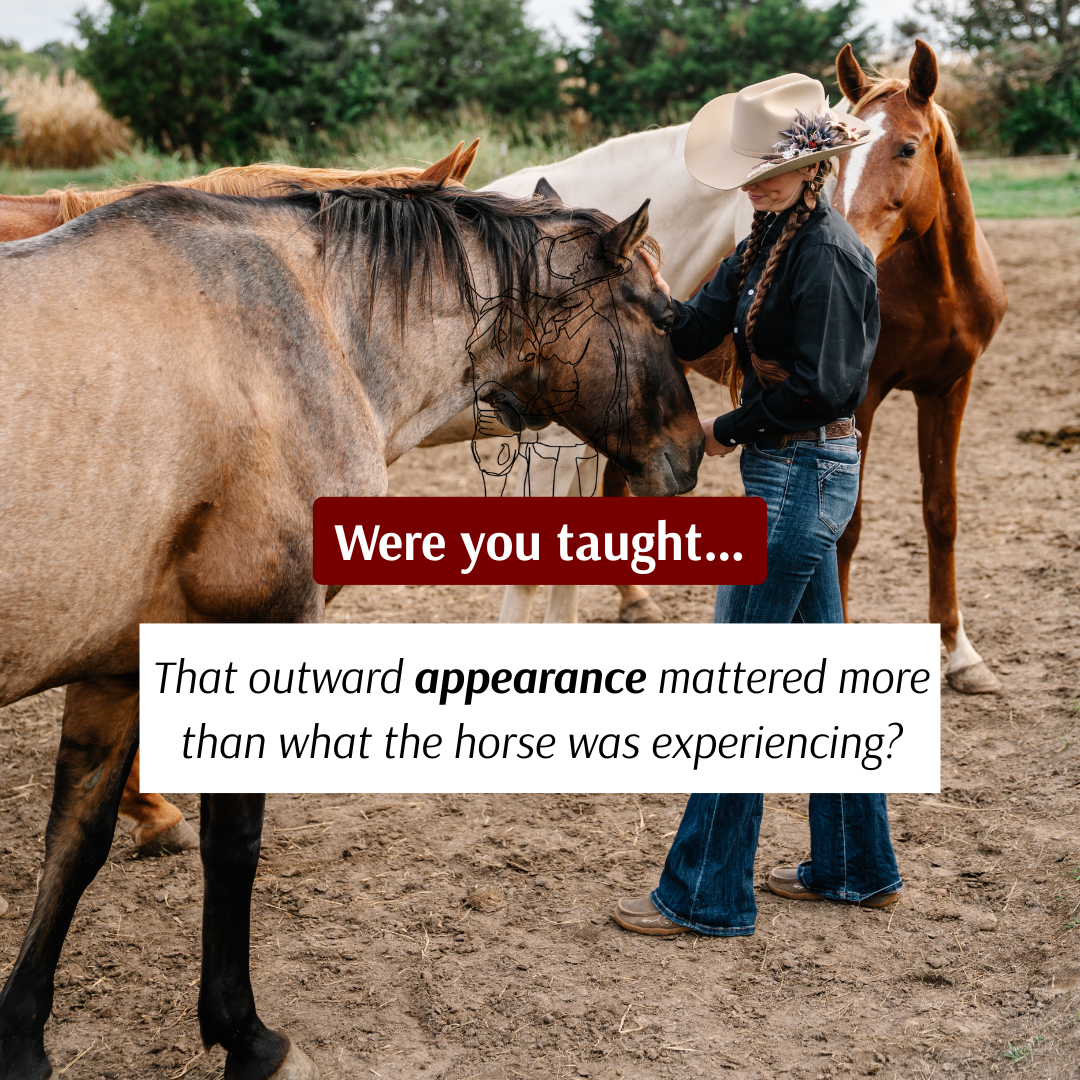
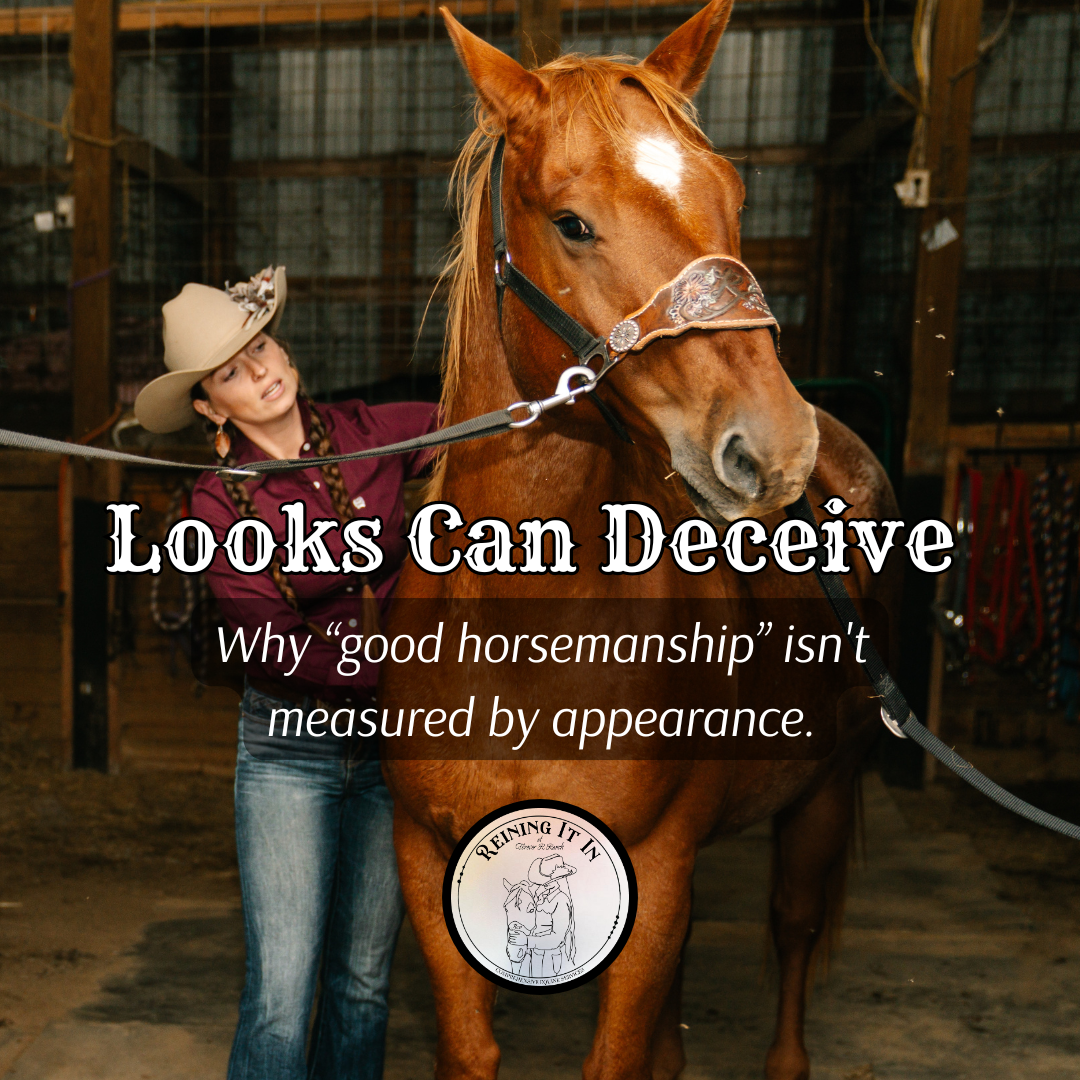
Were You Taught…
Were you taught good horsemanship looks a certain way?
Were you taught by mentors you trusted—believing them because you wanted to do right by the horse?
“To be successful in showing horses, you have to keep your show horse protected in a stall.”
“You can’t take your show horse on a trail—what if he gets hurt?”
“Don’t gallop your pleasure horse, that’ll ruin him.”
“Riding often is what builds a good horse.”
“All it takes is the right bit.”
I heard these things early on. Over and over. They were presented as facts—non-negotiables if I wanted to be successful.
I grew up spending more time on four legs than two. When I decided I wanted to compete, my dad bought me my dream horse for Christmas in 2009—a black gelding named Peppy. I couldn’t wait to prepare him for the ring.
Consistency came easily to me. I rode often. I spent time just being with my horses whenever I could. When I hit roadblocks, my dad helped me find mentorship. The advice I received all sounded similar: headset, pace, equipment. That’s what success looked like.
As an adolescent, I was directed toward harsh bits, draw reins, martingales, and lunging aids. None of it sat right with me. I was the kid riding bareback in the pasture, most times with nothing more than a halter—often nothing. I couldn’t shake the question—do I really need all this to be successful?
The pressure was subtle but persistent. It felt like I wasn’t “anybody” unless I used the same tools everyone else did. Appearance came quickly that way. Results, too. It was popular. It was efficient. And it was rewarded.
I remember the first time I used training forks. My hands hurt from the tension as I held my reins tighter and tighter, asking Peppy to put his head lower while the twisted wire snaffle dug into his gums. Outwardly, it looked right. Internally, I knew something was wrong.
The Cultural Conditioning of Horsemanship
My dad often told me to study those who won. So I did.
I watched. I asked questions. I listened.
I heard about eye-catching shirts, long spurs to keep riders still, and why “you can’t keep a nice show horse outside.” I followed advice as best I could, never fully committing. I wanted to stand out for my partnership with Peppy—not for how we looked.
People complimented his physique and my riding, but still edged in suggestions. Fix his headset. Get a proper saddle. Spend more money here, add more there.
Eventually, I began to believe that this was simply what good horsemanship was: getting a horse to comply on a timeline. Using gadgets. Pulling on faces. Dominating movement. A reactive horse “under control” was admired—even celebrated.
As a young girl, this shaped me more than I realized at the time. Horses were treated less like partners and more like tools. Replaceable. Managed. Controlled.
The Limits of Appearance
So what does a happy horse actually look like?
To me, it’s a horse who is calm, present, and willing. One who looks like he enjoys what he’s doing.
While many winning horses moved beautifully, their expressions told a different story—flat eyes, tension, disconnection. One judge mentor taught me to prioritize a horse who liked his job: forward ears, bright eyes, honest effort. I held onto that.
What I didn’t yet understand was this: a horse can look correct while carrying fear, tension, or confusion beneath the surface.
Before Peppy, I rode a horse named Cody in walk-trot western pleasure classes. He placed well. He was quiet—almost too quiet. Withdrawn. I wanted to lope him, but I was never allowed. Weeks later, my dad received a call. Cody had exploded in the show pen when asked to lope, throwing his trainer and causing serious injury.
Cody was always on the judge’s card. He looked perfect. And yet, something had been brewing underneath all along.
Stewardship Asks a Different Question
Looking back, the mental notes I took as a young rider mattered. Even when I followed the advice I was given, I cried and apologized when I saw those same expressions appear in my own horses. I didn’t want that for them.
The industry rewards presentation. Frame. Compliance. And so we learn to bulldoze past discomfort—just one more show, then they’ll get a break.
A horse can display tail swishing, biting, stiffness, uneven limb loading, tension, or inability to stand still—and still be awarded first place. Appearance is convincing like that.
Stewardship asks a different question: How does this feel to the horse?
Faith, Humility, and Listening
When a horse shows discomfort, our response doesn’t have to be “get over it.” It can be curiosity.
Scripture gives us the image of the shepherd—not dominating the flock, but knowing it. Protecting it. Responding to its needs.
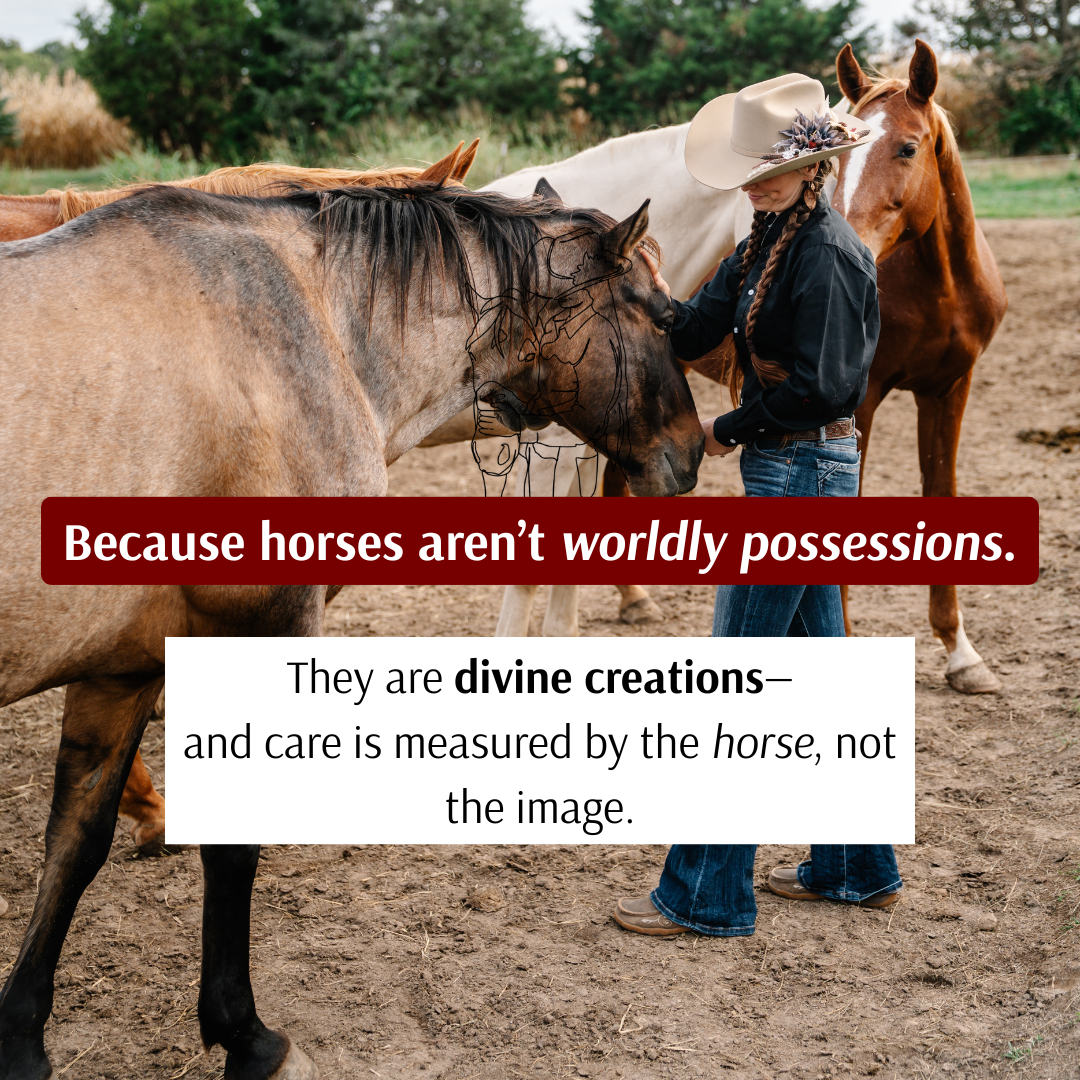
Stewardship is both practical and spiritual. Horses are not possessions. They are creations entrusted to us. And care that honors God’s design requires humility—the willingness to question what we’ve been taught when it no longer serves the horse.
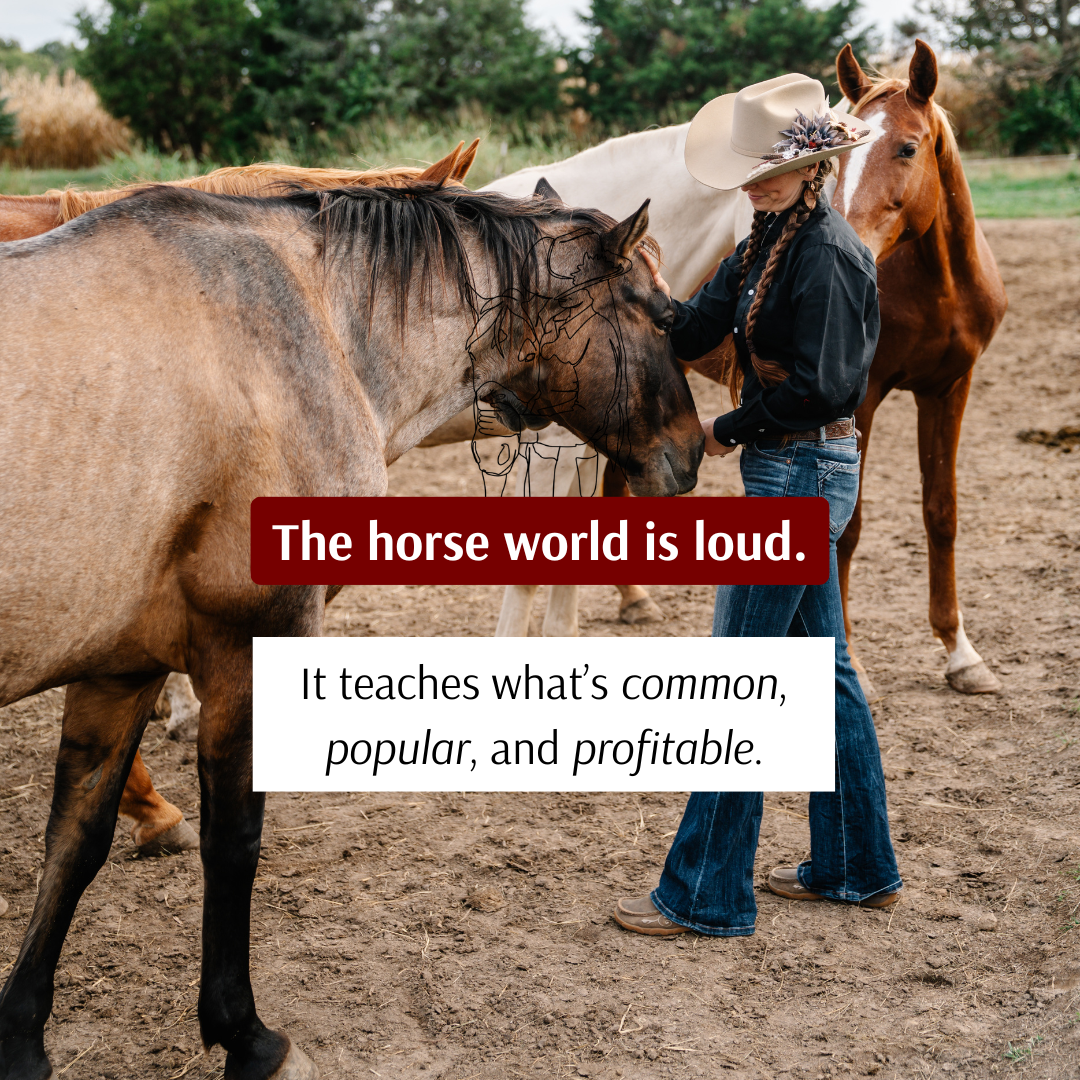
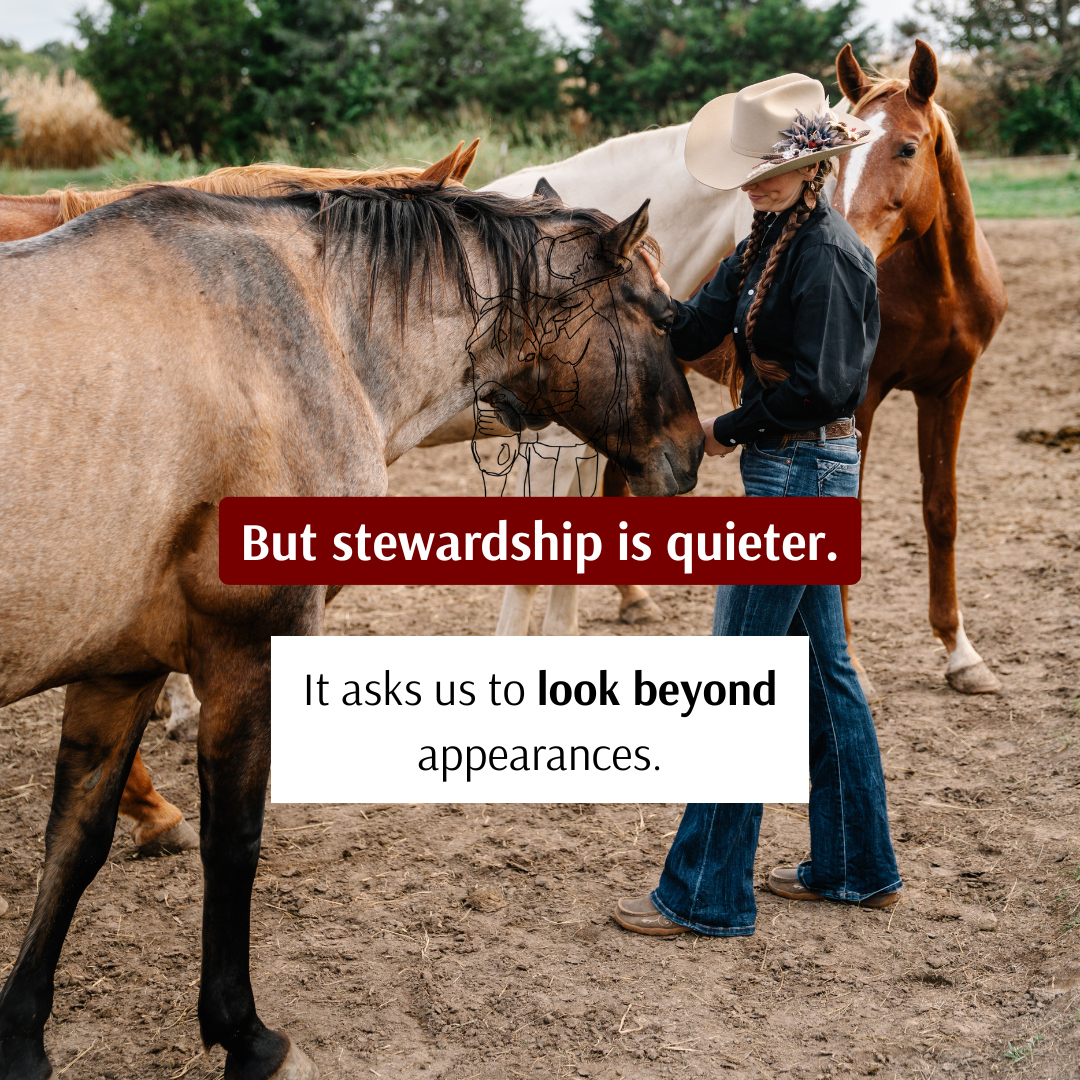
The horse world largely teaches what is common, popular, and profitable. Stewardship asks us to look beyond appearances and measure care by the horse himself.
An Invitation to Stewardship
It’s okay to pause. To reevaluate. To admit that something looks right but doesn’t feel right.
Good horsemanship isn’t proven by how easy it appears from the outside. It’s revealed through the horse’s experience.
So let this be an invitation—not to abandon everything you’ve been taught, but to look again.
To notice.
To listen.
To allow the horse to be the metric.
Because stewardship begins when we stop asking, “Does this look good?”
and start asking, “How does this feel?”
That question changes everything.
Part 1 of 7